

What Is a Garmin Transducer?
A Garmin transducer is the sonar heart of any Garmin fish finder or chartplotter. It transmits sound pulses through the water and listens for the echoes that bounce back from fish, structure, and the bottom — translating those signals into vivid on-screen imagery that helps anglers locate and catch more fish.
Garmin’s transducer lineup is among the most comprehensive in the marine electronics industry, ranging from entry-level dual-beam CHIRP units to the revolutionary LiveScope Plus real-time scanning sonar system. Whether you fish freshwater bass lakes, nearshore flats, or deep offshore waters, there is a Garmin transducer engineered to give you a decisive edge.
🔊 How Garmin Sonar Works
Garmin transducers use piezoelectric elements to convert electrical energy into sound waves. Those waves travel through water and return echoes when they strike fish, vegetation, rock, or the bottom. The transducer captures the returning signal and your Garmin unit processes it — building the detailed sonar picture you see on screen. CHIRP technology sweeps a continuous band of frequencies for superior clarity and target separation compared to traditional single-frequency sonar.
How to Read Garmin Transducer Model Names
Garmin uses a structured naming system that encodes the key specs of every transducer directly into its model number. Understanding this system lets you quickly identify what a transducer does and whether it’s compatible with your unit — without reading the full spec sheet.
📖 Decoding the GT52HW-TM
GT = Garmin Transducer
52 = Capabilities: Traditional CHIRP + ClearVü + SideVü
H = High band CHIRP
W = Wide beam angle
TM = Transom Mount
Other mount codes: TH = Thru-Hull · IH = In-Hull · IF = Ice Fishing
Band codes: L = Low · M = Mid · H = High
Beam codes: W = Wide · N = Narrow · UHD = Ultra High Definition
Types of Garmin Transducers
Garmin offers a wide spectrum of transducer types to match every fishing scenario, boat type, and sonar technology. Here’s a breakdown of the major categories:
Traditional CHIRP
The all-rounder. Conical beam sonar swept across a CHIRP frequency band for excellent fish arches, depth range, and bottom definition. The foundation of any sonar setup.
ClearVü Scanning
Garmin’s Down Imaging equivalent. A narrow fan beam delivers near-photographic images of structure and fish directly below the boat with stunning clarity.
SideVü Scanning
Scans wide areas to both sides of the boat with razor-sharp detail. Ideal for quickly mapping structure, finding submerged timber, and locating offshore humps.
UHD (Ultra High Def)
Garmin’s premium scanning sonar, delivering the highest resolution ClearVü and SideVü images available. Best for shallow to mid-depth fishing where detail is paramount.
LiveScope
Real-time live sonar showing fish and lures moving in real time. The most advanced transducer technology Garmin offers — a game-changer for sight fishing and reaction bait techniques.
Ice Fishing
Purpose-built ice transducers including dual-beam CHIRP models and Panoptix LiveScope setups designed specifically for drop-hole deployment in freezing conditions.
All-in-One (3-in-1) Transducers
Garmin’s GT-series “3-in-1” transducers — like the popular GT52HW-TM and GT56UHD-TM — combine Traditional CHIRP, ClearVü, and SideVü scanning sonar into a single unit with one cable connection. These are a superb value for anglers who want all three sonar views without running multiple transducers or extra wiring.
Key Garmin Transducer Technologies
CHIRP Sonar
CHIRP (Compressed High Intensity Radar Pulse) is Garmin’s standard sonar technology, found across their entire transducer lineup. Unlike traditional single-frequency sonar, CHIRP sweeps a continuous band of frequencies — Low (28–60 kHz), Mid (80–160 kHz), or High (150–220 kHz) — producing dramatically superior target separation, reduced noise, and greater usable depth range. High Wide CHIRP is best for shallow inland fishing and fast boats; Mid band excels at structure definition; Low band reaches extreme depths offshore.
ClearVü & SideVü Scanning Sonar
Garmin’s ClearVü and SideVü scanning sonars use thin, high-frequency fan beams to generate photo-like images of the underwater world. ClearVü fires a beam directly below the boat, producing crisp images of bottom composition, structure details, and fish positions. SideVü extends that same clarity out to the sides of the boat — letting you scan large areas of water without driving directly over them.
Ultra High-Definition (UHD) Sonar
Garmin’s UHD sonar, found in transducers like the GT54UHD and GT56UHD, pushes ClearVü and SideVü frequencies even higher for remarkable resolution at short to medium ranges. The GT56UHD is widely recognized as Garmin’s best all-in-one transducer for freshwater fishing — delivering vivid color images of fish and structure up to 350 feet in saltwater and 500 feet in freshwater using a single transom-mount unit. The GT54UHD extends that depth range further for deeper applications.
Garmin LiveScope & LiveScope Plus
Garmin LiveScope is real-time forward-facing live sonar — the most significant innovation in fishing electronics of the past decade. The LiveScope Plus System uses the LVS34 transducer and delivers improved resolution, reduced noise, and cleaner images compared to the original LiveScope. It works in Forward (seeing ahead of the boat), Down (below the boat), and Scout (wide panoramic view) modes. For extended-range coastal and open-water fishing, the LVS62 transducer paired with a GLS10 black box sonar module provides LiveScope imagery at significantly greater distances. Maximum depth is 200 feet for standard LiveScope, making it ideal for most bass, walleye, and panfish applications.
Panoptix LiveScope for Ice Fishing
Garmin’s Panoptix LiveScope System with the LVS32 transducer has transformed ice fishing. It provides two live sonar modes — LiveVü Forward (watching fish approach your jig horizontally through the ice) and LiveVü Down (real-time view directly below your hole) — making it possible to watch every strike in real time. It can also scan around the ice hole to locate fish and structure before even drilling.
Garmin Transducer Mounting Options
Choosing the right mounting style is just as important as choosing the right transducer technology. Garmin’s GT-series transducers are available in multiple mount styles for most models.
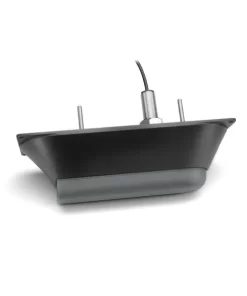
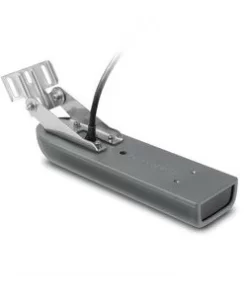
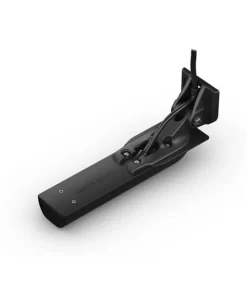
Transom Mount (TM)
The most popular choice. Bolts to the back of the boat below the waterline. Streamlined for speed, easy to install, and included with most Garmin fish finders as standard equipment.
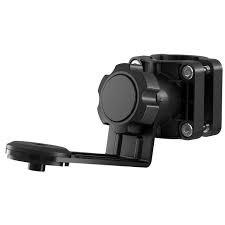
Trolling Motor Mount
Mounts to the trolling motor shaft, pointing the transducer in the direction of travel. Essential for LiveScope setups and forward-facing sonar applications on bass and walleye boats.
Thru-Hull (TH / THF)
Drilled through the hull for a clean, permanent installation with minimal drag. Available in standard and flush-mount (THF) configurations for various hull deadrise angles.
In-Hull (IH)
Shoots sonar through the hull material without cutting holes. Ideal for fiberglass hulls. High Wide CHIRP in-hull transducers are perfect for high-speed boats where transom cavitation is a problem.
Ice Fishing (IF)
Dropped directly into an ice hole. Available as single/dual-beam CHIRP for classic ice sonar or as full Panoptix LiveScope systems for real-time live imaging.
Black Box Systems
LiveScope XR and other high-powered setups use an external GLS10 sonar module (black box) to drive the transducer, offloading processing from the chartplotter for optimal performance.
Garmin Transducer Comparison Table
Compare the most popular Garmin transducer models side by side to find the best match for your fish finder and fishing style.
| Model | Type | Technology | Max Depth | Mount | Best For |
|---|---|---|---|---|---|
| GT20-TM | CHIRP | Traditional CHIRP 2D | 800 ft | Transom | Entry-level ECHOMAP, general freshwater |
| GT52HW-TM | 3-in-1 | CHIRP + ClearVü + SideVü | 2,300 ft | Transom | ECHOMAP UHD, STRIKER series — all-around |
| GT54UHD-TM | UHD 3-in-1 | UHD ClearVü + SideVü + CHIRP | 2,300 ft | Transom | ECHOMAP UHD2, deep structure fishing |
| GT56UHD-TM | UHD 3-in-1 | UHD ClearVü + SideVü + Hi-Wide CHIRP | 500 ft fresh / 350 ft salt | Transom / TH | Shallow to mid freshwater, best detail |
| LVS34 (LiveScope Plus) | Live Sonar | Forward-Facing Real-Time Live | 200 ft | Trolling Motor | GPSMAP / ECHOMAP Ultra — tournament fishing |
| LVS62 (LiveScope XR) | Live Sonar XR | Extended Range LiveScope | 200 ft+ | Trolling Motor | Coastal, open water, deeper live sonar |
| GT15M-THF | CHIRP | Mid-Band CHIRP 600W | 2,500 ft | Flush Thru-Hull | Offshore, fiberglass, mid-size boats |
| LVS32 (Panoptix Ice) | Ice / Live | Real-Time LiveVü Forward + Down | 200 ft | Ice Hole Drop | Ice fishing, Panoptix-compatible chartplotters |
How to Choose the Right Garmin Transducer
With dozens of Garmin transducer models available, narrowing down your choice comes down to four key considerations.
1. Match Your Chartplotter or Fish Finder
Garmin transducers are designed for specific units and sonar systems. The ECHOMAP UHD2 series supports UHD transducers; the STRIKER series works with standard GT transducers; GPSMAP units support the full range including LiveScope. Always cross-reference Garmin’s official 2025 Transducer Selection Guide PDF to confirm compatibility before buying. Using an incompatible transducer will result in no sonar signal or degraded performance.
2. Choose Your Sonar Technology
For casual fishing and bottom reading, a CHIRP 2D transducer is all you need. For serious structure fishing, add ClearVü and SideVü with a GT52HW or GT56UHD. If you’re chasing bass in tournaments or love to watch fish react to your lure, LiveScope Plus is the single biggest performance upgrade available in fishing electronics today.
3. Select the Right Mounting Style
Transom mounts work for most aluminum and fiberglass boats. High-speed boats benefit from in-hull mounts to avoid cavitation turbulence at speed. Offshore boats and serious anglers often prefer thru-hull mounts for permanence and optimal signal. LiveScope and Panoptix systems mount to the trolling motor shaft.
4. Match Frequency to Water Depth
Higher frequencies (UHD, High Wide CHIRP) give the best detail but are limited to shallower depths. The GT56UHD tops out at around 350–500 feet. For offshore fishing beyond 500 feet, choose a Mid or Low band CHIRP transducer like the GT15M or GT51M series, which can reach depths of 2,300 feet and beyond in optimal conditions.
💡 Quick Buyer’s Picks
Beginner / Budget: GT20-TM — solid CHIRP 2D performance, compatible with STRIKER Plus and entry ECHOMAP units.
Inland / Bass Angler: GT56UHD-TM — the best all-in-one for crystal-clear freshwater imaging at typical depths.
Tournament / Sight Fishing: LVS34 LiveScope Plus — real-time live sonar is the most impactful upgrade available.
Offshore Saltwater: GT15M-THF — 600W mid-band CHIRP in a flush thru-hull mount for clean, deep offshore sonar.
Ice Angler: LVS32 Panoptix — watch fish swim toward your jig in real time, through the ice.
Garmin Transducer Installation Tips
Transom Mount Best Practices
Mount the transducer so its face is parallel to the waterline and at least one inch below the hull bottom at rest. Position it away from strakes, rivets, and water disturbances from the engine. Most Garmin transom mounts include an adjustable bracket — set it once at low speed and verify the angle holds at higher speeds. Cavitation bubbles hitting the transducer face are the number one cause of lost bottom signal at speed.
Thru-Hull and Flush-Mount Installation
Garmin’s flush-mount (THF) thru-hull transducers come in different tilt versions to match hull deadrise angle. The GT12M-THF is for 0–7° deadrise hulls, while the 12° tilt version suits 8–15° deadrise. Selecting the wrong tilt will angle your sonar beam off-center, degrading performance. Always match the tilt to your specific hull. Bronze thru-hull transducers are recommended for boats with inboard engines.
LiveScope Trolling Motor Setup
For LiveScope, mount the transducer bracket to the trolling motor shaft so the transducer face points forward when in Forward mode and downward when rotated to Down mode. Keep the trolling motor head cable and LiveScope cable separated from each other and from any VHF or power cables to prevent electrical interference. A clean, separated cable run will eliminate the most common source of LiveScope image degradation.
Frequently Asked Questions

GARMIN FISH FINDER
GARMIN FISH FINDER
GARMIN FISH FINDER
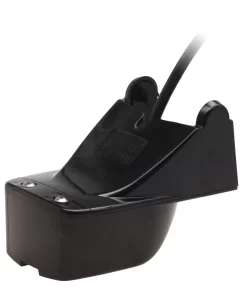
Airmar Tm165c-hw Transducer High Wide Chirp With Garmin 12-pin
GARMIN FISH FINDER
GARMIN FISH FINDER
GARMIN FISH FINDER
GARMIN FISH FINDER
GARMIN FISH FINDER
GARMIN FISH FINDER