

What Is a Humminbird Transducer?
A Humminbird transducer is the sonar engine behind every Humminbird fish finder. It converts electrical signals into sound waves, sends them through the water, and interprets the returning echoes to paint a detailed picture of what lies beneath your boat. Without the right transducer, even the most advanced fish finder display is just a blank screen.
Humminbird, a brand under Johnson Outdoors, has built a reputation for industry-leading sonar technology. From entry-level dual-beam setups to cutting-edge MEGA 360° Imaging, their transducer lineup is engineered to give anglers a competitive edge — whether you’re bass fishing a shallow reservoir or deep-sea trolling in open water.
🔊 How Sonar Works
A transducer emits a cone-shaped sonar beam downward (and sideways, for imaging models). When the signal bounces off fish, structure, or the bottom, the transducer picks up the echo and sends the data to your fish finder display — giving you real-time depth, fish location, and underwater terrain in remarkable detail.
Types of Humminbird Transducers
Humminbird offers a wide variety of transducer types, each designed for specific sonar capabilities and fishing scenarios. Understanding the differences will help you match the right transducer to your fish finder and fishing style.
2D Sonar Transducers
Traditional down-facing sonar showing depth, fish arches, and bottom composition. Ideal for beginners and classic fishing setups.
Down Imaging (DI)
Uses a thin, high-frequency beam to create a near-photographic view of structure and fish directly below the boat.
Side Imaging (SI)
Scans wide swaths of water to both sides of the boat — essential for covering large areas and finding fish-holding structure quickly.
MEGA Imaging
Humminbird’s premium technology operating at higher frequencies (800 kHz+) for razor-sharp underwater images with extraordinary detail.
MEGA Live Imaging
Forward-facing live sonar that shows fish and structure moving in real time. A game-changer for sight fishing and reaction bait techniques.
MEGA 360 Imaging
Rotates 360 degrees to deliver a full circle of MEGA Imaging clarity around your boat — the ultimate awareness tool for any angler.
Ice Fishing Transducers
Humminbird’s XI (Ice) series transducers are purpose-built for ice fishing. Models like the XI 9 20 offer dual-beam coverage (20°/60°) at 200/83 kHz and are compatible with ICE HELIX and many legacy non-CHIRP units. They’re designed to drop directly into an ice hole and deliver crisp readings even in frigid temperatures.
Portable Transducers
The XPT (Portable Transducer) line lets you take your fish finder anywhere — kayaks, rental boats, or ice shelters — without permanent installation. Simply clamp or hand-hold the transducer over the side for instant sonar readings wherever you fish.
Key Technologies Explained
CHIRP Sonar
CHIRP (Compressed High Intensity Radar Pulse) technology transmits a continuous sweep of frequencies rather than a single frequency, resulting in dramatically improved target separation, depth range, and signal-to-noise ratio. Humminbird’s Dual Spectrum CHIRP transducers — like the XNT 9 HW T — operate across a CHIRP range of 150–220 kHz and can reach depths of up to 1,200 feet. This makes them a step up from traditional sonar for serious anglers who want to differentiate closely-grouped fish or distinguish fish from structure.
MEGA Imaging Technology
Exclusive to Humminbird, MEGA Imaging operates at higher frequencies (MEGA Side Imaging at 1.2 MHz, MEGA Down Imaging at 1.2 MHz) to produce photo-like clarity of underwater environments. The detail difference compared to standard 455 kHz Side Imaging is immediately visible — you can pick out individual branches, rocks, and fish with stunning precision.
The MEGA SI+ (Side Imaging Plus) and MEGA DI+ (Down Imaging Plus) designations indicate the latest generation of these transducers, offering even sharper resolution and extended coverage. Look for the “MSI” and “MDI” abbreviations when identifying transducer models.
MEGA Live Imaging
MEGA Live Imaging is Humminbird’s forward-facing live sonar technology, delivering the crystal clarity of MEGA Imaging in real time. The MEGA Live 2 transducer mounts to a trolling motor shaft and provides three live sonar views — Forward, Down, and Scout modes. It’s compatible with select HELIX, SOLIX, and APEX models and has become one of the most-discussed innovations in tournament bass fishing.
MEGA 360 Imaging
The MEGA 360 Imaging transducer provides a full 360-degree panoramic view of your surroundings by rotating on the trolling motor shaft. It’s compatible with Minn Kota Fortrex, Maxxum, and Ultrex trolling motors and delivers MEGA-quality imaging in every direction simultaneously — giving you an unparalleled awareness of fish-holding structure all around the boat.
Humminbird Transducer Mounting Options
One of the most important decisions when selecting a Humminbird transducer is how and where it will be mounted. The right mount type depends on your boat hull, fishing style, and the sonar performance you need.
Transom Mount (XM / XNT)
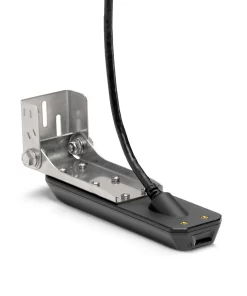
The most common type. Mounts to the back of the boat below the waterline. Streamlined for fast boats and includes 20 ft cable with built-in temperature sensor on most models.
Trolling Motor Mount (XTM)
Attaches to the trolling motor shaft so the transducer always points in the direction of travel. Ideal for MEGA Imaging and forward-facing sonar setups.
Thru-Hull (XP / TH)
Installed through a drilled hole in the hull for a clean look and no water resistance drag. Recommended for fiberglass and aluminum hulls; bronze models available for inboard engines.
In-Hull (XP Puck)
Shoots sonar through the hull material without any holes or external installation. Great for fiberglass hulls where drilling is undesirable. Minor signal loss is the trade-off.
Ice Fishing (XI)
Dropped directly through an ice hole. Available in single and dual beam models with slim profiles designed for easy hole deployment.
Portable (XPT)
No permanent mounting required. Hangs over the side of any boat or kayak for on-the-go sonar anywhere you fish.
Humminbird Transducer Comparison
The table below covers some of the most popular Humminbird transducer models and their key specifications to help you compare at a glance.
| Model | Type | Technology | Max Depth | Mount | Best For |
|---|---|---|---|---|---|
| XNT 9 HW T | 2D CHIRP | Dual Spectrum CHIRP | 1,200 ft | Transom | HELIX series, all-around use |
| XM 9 HW MSI T | MEGA SI+ | MEGA Side Imaging + CHIRP | 1,500 ft | Transom | HELIX 8–15 G3N/G4N |
| XM 14 HW MDI T | MEGA DI+ | MEGA Down Imaging + CHIRP | 1,500 ft | Transom | SOLIX MEGA DI models |
| XTM 9 HW MSI T | MEGA SI+ | MEGA Side Imaging + CHIRP | 1,500 ft | Trolling Motor | HELIX G3N/G4N, bow-mount setups |
| MEGA Live 2 | Live Sonar | Forward-Facing Live MEGA | 200 ft | Trolling Motor | HELIX, SOLIX, APEX — tournament fishing |
| MEGA 360 (Universal) | 360° Imaging | Rotating MEGA Imaging | 150 ft | Trolling Motor | Full-circle awareness, structure scanning |
| XI 9 20 | Ice | Dual Beam 200/83 kHz | 500 ft | Ice Hole Drop | ICE HELIX, all non-CHIRP HELIX |
| XP 9 HW Puck | In-Hull | CHIRP | 800 ft | In-Hull | Fiberglass hulls, no-drill install |
How to Choose the Right Humminbird Transducer
Selecting the correct transducer is arguably more important than choosing the fish finder itself. Here’s a step-by-step framework:
1. Start with Your Fish Finder Model
Humminbird transducers are engineered to match specific fish finder generations. A HELIX G1 transducer is not directly compatible with a HELIX G3 or newer unit, and mixing incompatible hardware can result in no sonar signal at all. Always cross-reference Humminbird’s official Transducer Compatibility Guide or the 2025 HB Sonar Compatibility PDF before purchasing.
2. Decide on Sonar Type
If you’re primarily fishing shallow, structure-rich water (docks, laydowns, grass edges), Side Imaging and MEGA Side Imaging will transform your fishing. For deep water column jigging or trolling on the Great Lakes, powerful 2D CHIRP sonar is your workhorse. For tournament-level presentation fishing, MEGA Live Imaging has become essential.
3. Match the Mount to Your Boat
Transom mounts work for most bass and walleye boats. Thru-hull mounts suit fiberglass offshore or pontoon boats seeking a cleaner installation. Trolling motor mounts are ideal if you want the transducer to track where you’re heading. In-hull puck transducers are the easiest to install but deliver slightly less resolution.
4. Consider Water Depth and Conditions
Fishing deep reservoirs or offshore? Choose a high-power CHIRP or MEGA transducer rated for 1,200+ feet. For ponds, rivers, and shallow inshore flats, a standard 2D or Down Imaging transducer will serve you well without the premium cost.
💡 Quick Pick Guide
Beginner / Casual Angler: XNT 9 HW T (Dual Spectrum CHIRP Transom) — excellent all-around performance for HELIX models.
Serious Structure Angler: XM 9 HW MSI T — MEGA Side Imaging reveals exactly what you’ve been missing.
Tournament Angler: MEGA Live 2 — real-time live sonar is the single biggest advantage on the water today.
Ice Angler: XI 9 20 — purpose-built for the ice, rugged and reliable in freezing conditions.
Transducer Installation Tips
Even the best transducer will underperform if it’s poorly installed. Follow these best practices to get the most out of your Humminbird transducer.
Transom Mount Installation
Position the transducer so the face is parallel to the waterline and fully submerged at all speeds. Avoid mounting directly behind strakes, rivets, or riveted seams that cause turbulent water. Most Humminbird transom mounts come with mounting hardware and a full installation instruction sheet in the box — follow it carefully.
Cable Routing
Route transducer cables away from power wires and ignition systems to minimize electrical interference. Use cable clips to secure the cable along the hull and prevent chafing. Extension cables are available for larger boats, but keep them as short as possible to preserve signal quality.
In-Hull Puck Tips
For in-hull (shoot-through) installations, clean the hull surface thoroughly and use a high-quality epoxy or transducer oil to eliminate air gaps between the transducer face and the hull. Air pockets are the leading cause of degraded in-hull sonar performance.
Frequently Asked Questions
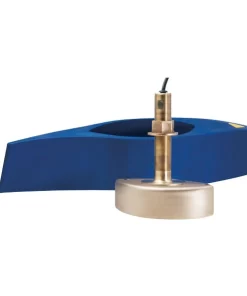
HUMMINBIRD FISH FINDER
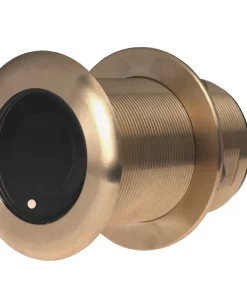
HUMMINBIRD FISH FINDER
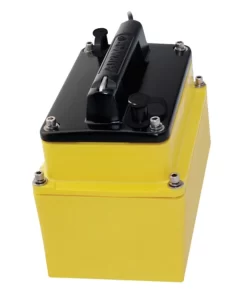
HUMMINBIRD FISH FINDER
Airmar M265c-lm-21hb 1kw Low Medium Chirp With Humminbird 21-pin Cable
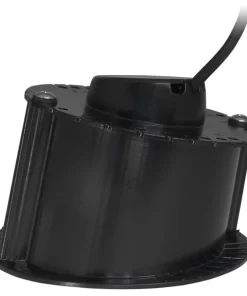
HUMMINBIRD FISH FINDER
Airmar M285c-hw Chirp In-hull With Humminbird 14-pin Mix-n-m
HUMMINBIRD FISH FINDER
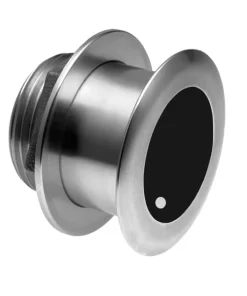
Airmar Ss175c-0-hw 0d Tilt High Wide Chirp With Humminbird 14-pin
HUMMINBIRD FISH FINDER
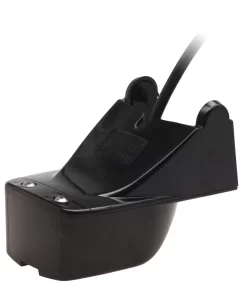
Airmar Tm165c-hw Transducer High Wide Chirp With Humminbird 14-pin
HUMMINBIRD FISH FINDER
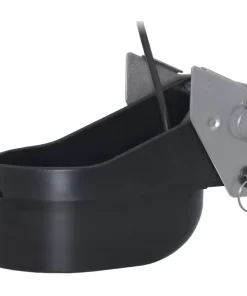
Airmar Tm185c Transducer High Wide Chirp With Humminbird 14-pin
HUMMINBIRD FISH FINDER
HUMMINBIRD FISH FINDER
HUMMINBIRD FISH FINDER
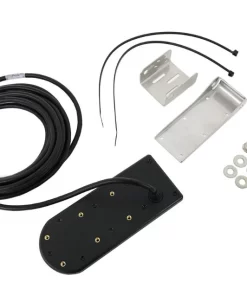
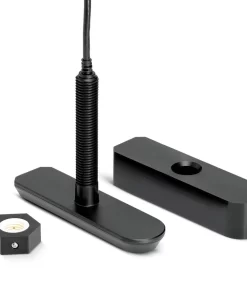
Humminbird Xpth-14-hw-msi-t Mega Si+ Di+ Dual Spectrum Chirp Plastic Thru Hull